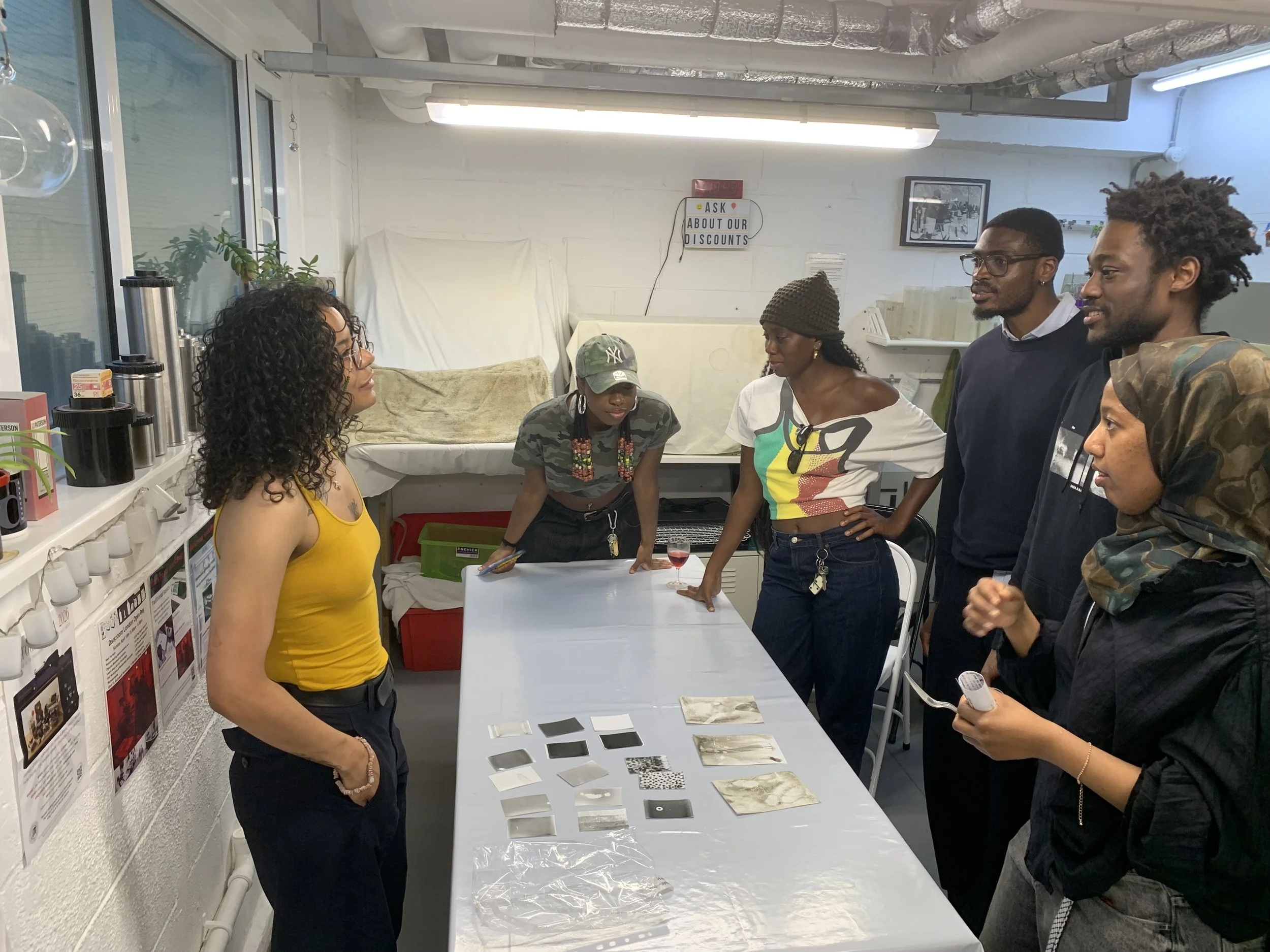
The latest LightWorks event was an evening of joy, warmth and discovery! Sometimes these evenings are a series of carefully pre-planned presentations, but this one was wonderfully impromptu and full of unconventional ideas, including the soothing jazz playing at the start!
You can book your free place to the next LightWorks on September 10th here.
There were eight attendees in total, four of whom are very familiar with the darkroom and four of who were first time visitors, with one of these a poet, the others photographers: Sophia, Dean, Takenyak and Daniel. This made for a lovely dynamic, with discussions ranging from photography as documentary, as self-expression, as psychological exposure, and as art.
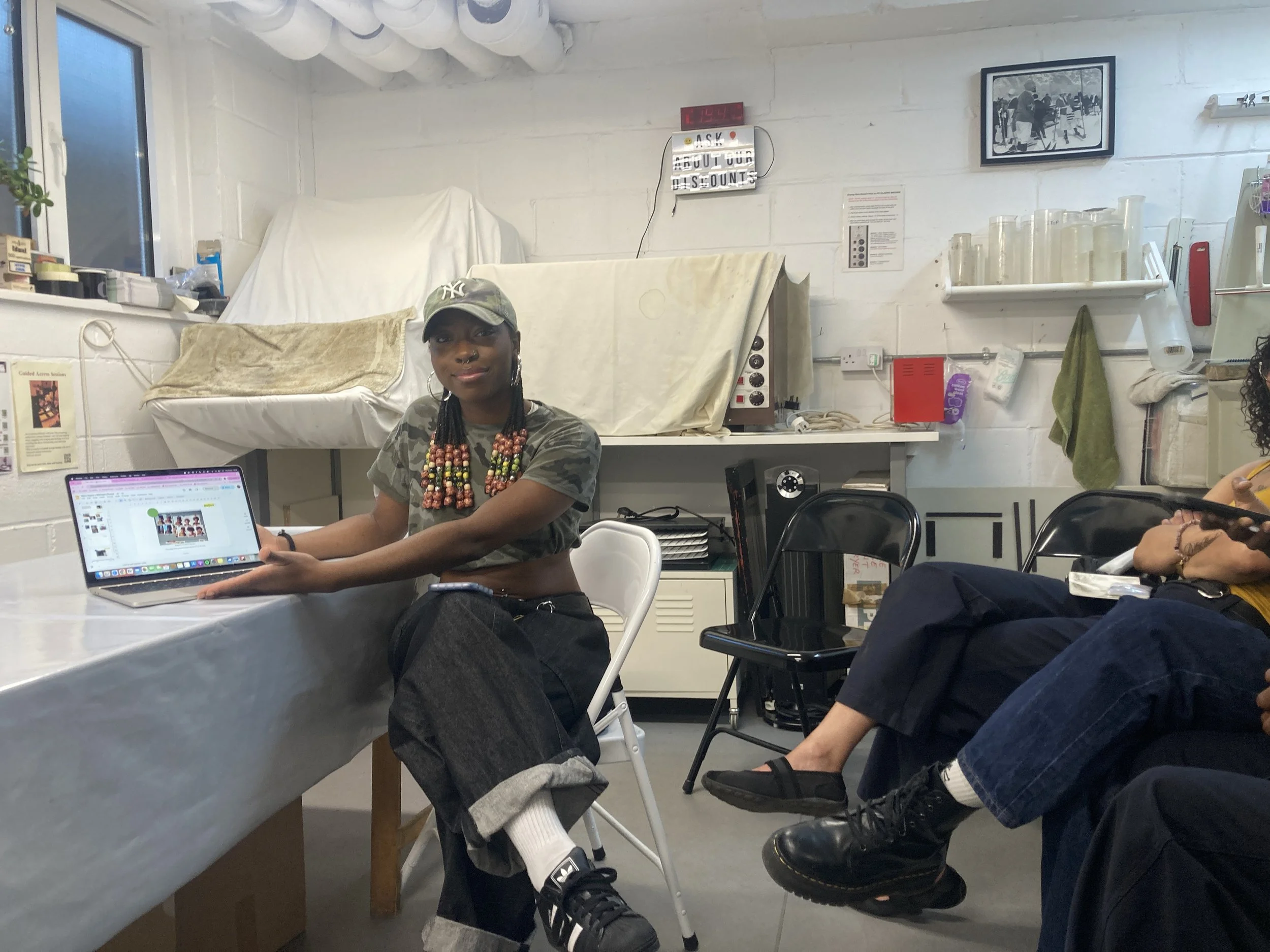
The first presenter was Mary Ngwu. She had not come planning to show work, but was persuaded to when we heard that she has a fascinating project brewing. Mary showed us a ‘treatment’ for a planned documentary and series of analogue photographs. Her work looks at the role of hair dressing, hair styling, wigs and weaves for black women, through the specific lens of one particular hairdresser. His long-standing, excellent work with local community members stands in stark contrast to that of the fly-by-night, unprofessional hairdressing popping up on TikTok and Instagram these days. Everyone was convinced that Mary should pursue this project and approach her subject about it.
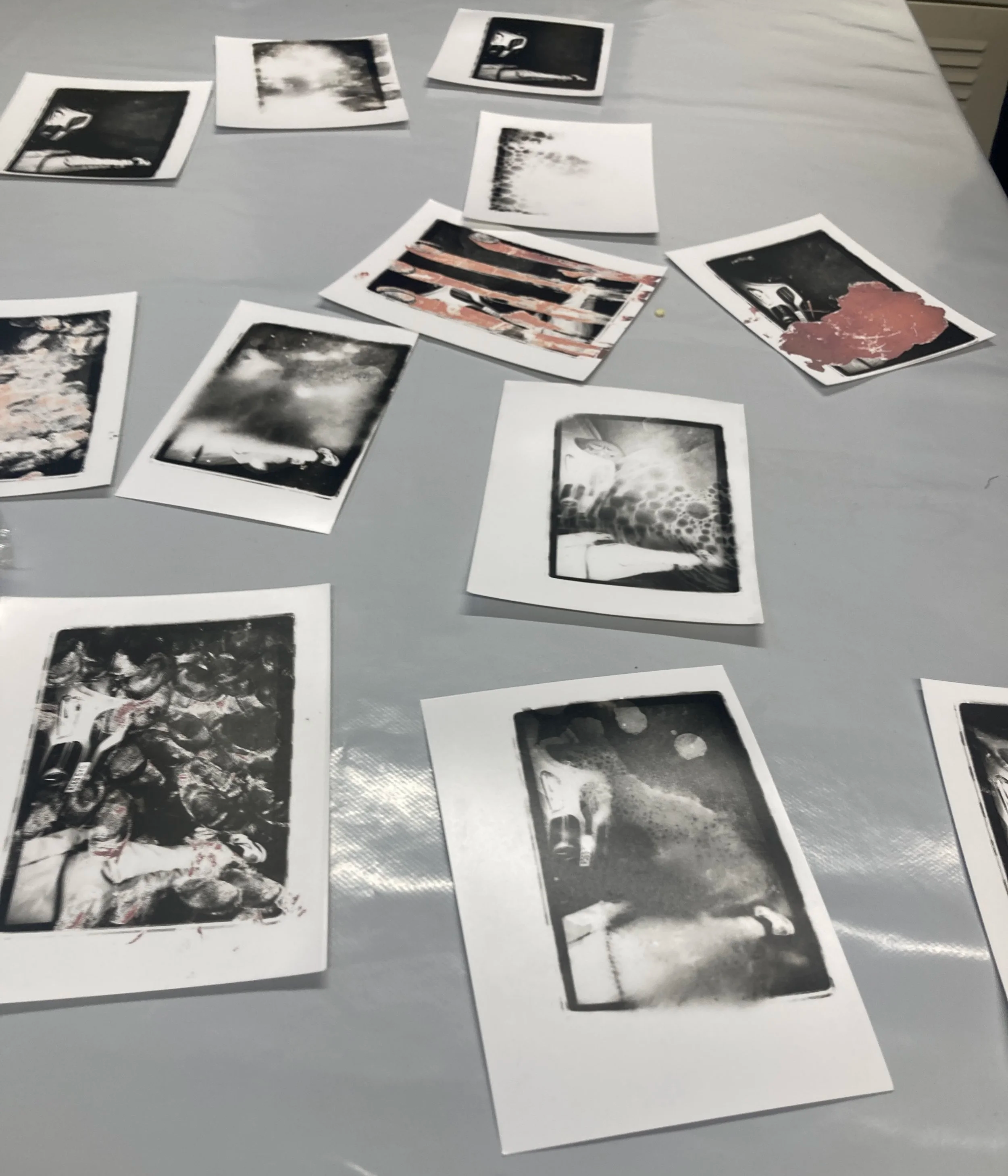
Next up was Lattina Da Costa, who has been doing some fascinating chemigram experiments away from her usual style of photography. Lattina showed a variety of exciting prints. One set were made during our recent Open Day, where she demonstrated how to make watergrams incorporating water soluble beads! This highly original method gave unique results, and everyone was intrigued. Her second set of prints were variations of a conventional darkroom print with chemigram interventions within the image. Each photographic print/chemigram featured different chemicals and ‘masks’ such as Vaseline to create swirls and lines and areas of colour over the prints. They were dynamic and original and those new to the process could hardly believe that all this is still photography.
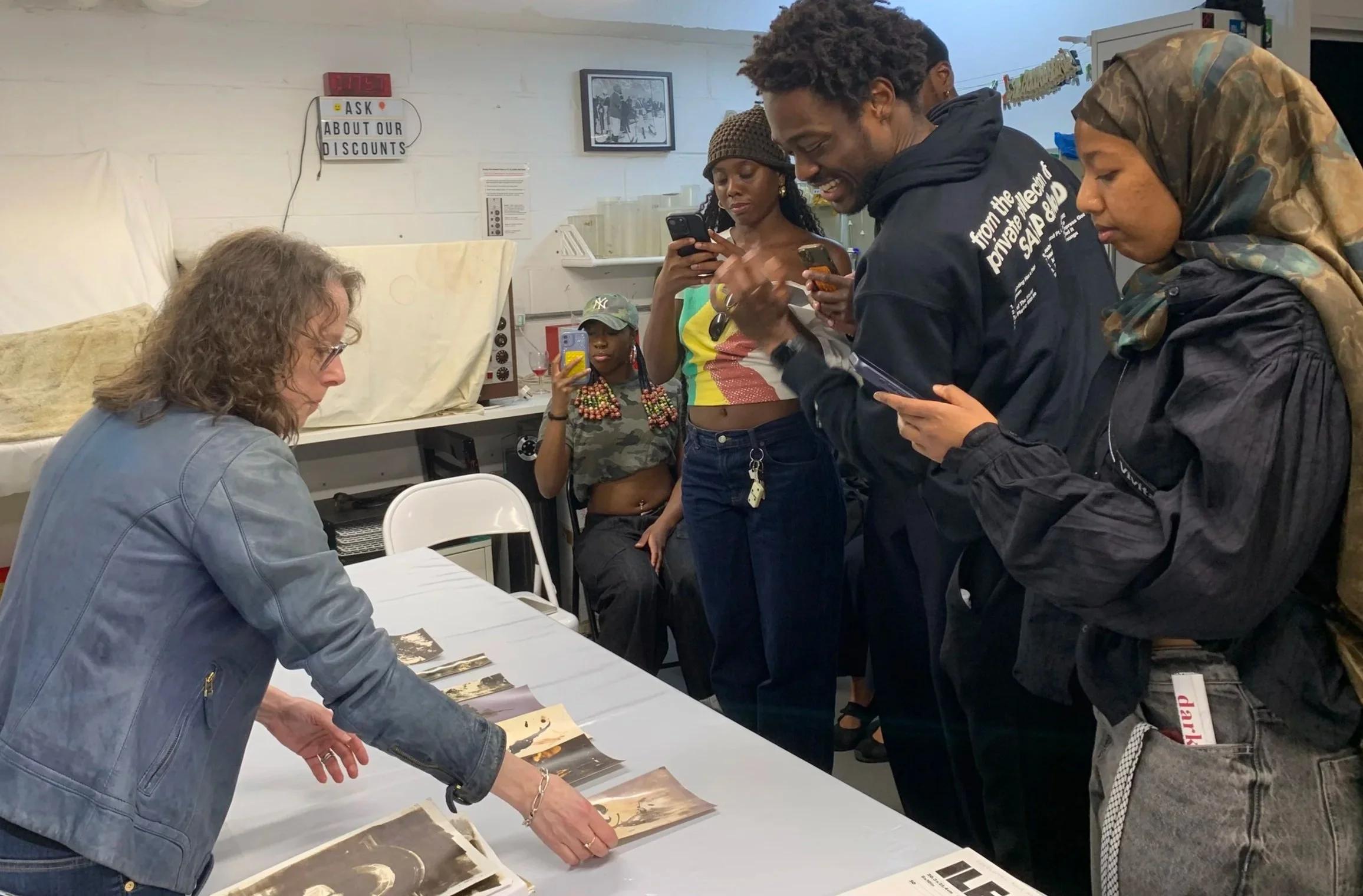
Milena Michalski came to LightWorks ready to present a body of work which she then decided to leave for another time, choosing instead to follow Lattina’s theme of chemigrams and wild ways of disrupting conventional photographic printing. In what was shaping up to be an evening of surprises, she showed some prints created as part of the darkroom workshops she runs with Elisabeth Scheder-Bieschin on alternative processes. Milena displayed the breadth of range of colours and textures which can be obtained by using different non-toxic ‘resists’ on a chemigram print, in other words, household foodstuffs like honey, humous, lemon juice and oil, substances. As with Lattina’s work, those present all wanted to explore this fun further!
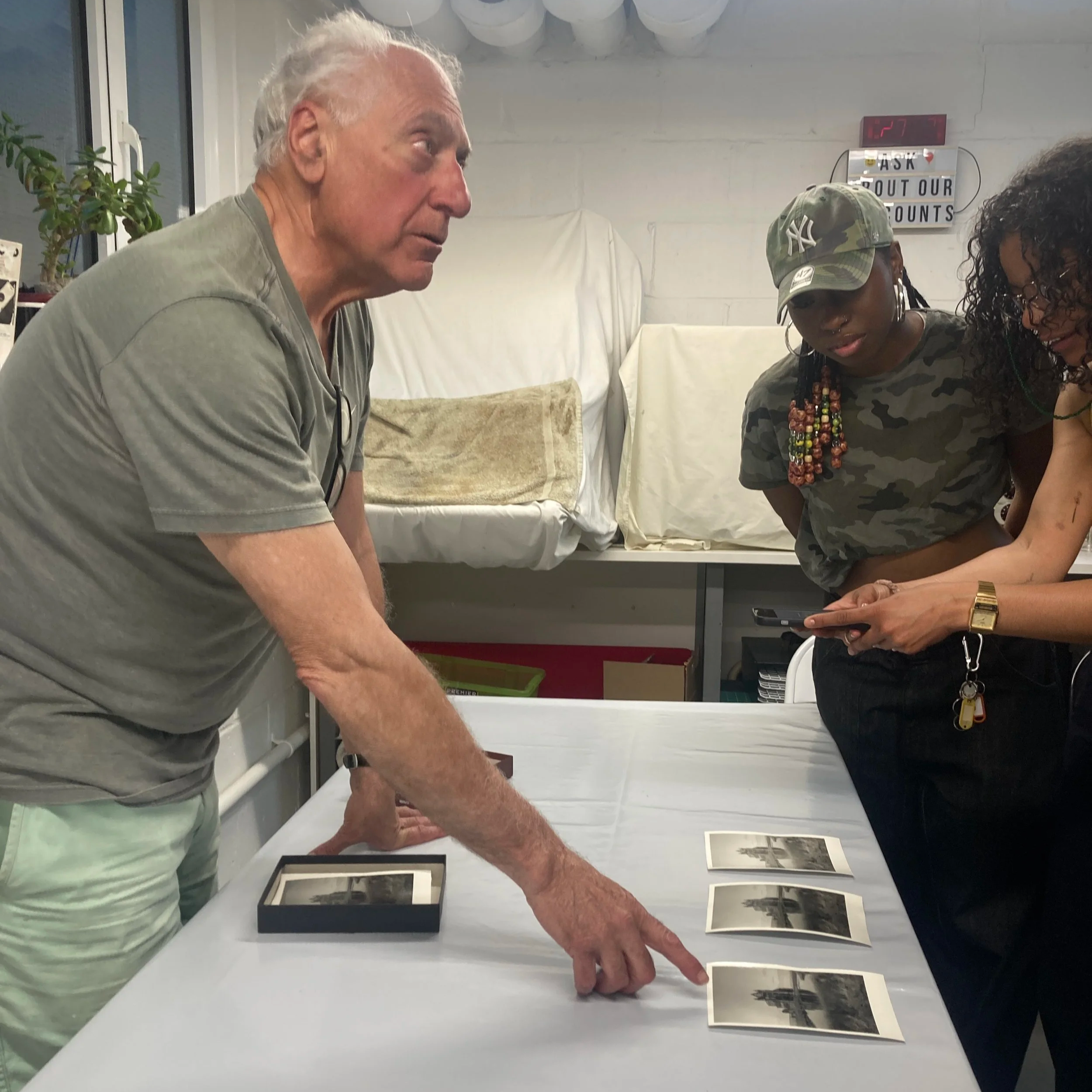
Continuing the impromptu jazz mood of the evening, Dennis Yandoli then spontaneously decided to show what he had been printing earlier in the day. He told us the story of how his wife had inherited a camera from her photographer aunt, and had decided to try it out when they were in Whitby. Dennis proceeded to show us some stunningly spooky and evocative prints of the ruins of the ancient Abbey in Whitby which inspired Bram Stoker’s Dracula. The prints were beautiful, taken by someone who would not call herself a photographer, and Dennis had worked his magic on them and showed us how different an image can feel depending how you process the print, how the contrast of the image can affect it. The image included a reflection of the Abbey ruins in a water pool, which added to the ghostly atmosphere. We also discussed paper tones as it was clear that the warm tone of the paper, along with its fibre base, were important to fully bring out the mood of this print.
The evening concluded with a conversation asking how we each feel about being photographed ourselves, and about memory, lived experience and being in front of and behind the camera. We all left keen to continue talking, viewing and making!
As always, LightWorks evenings centre around open dialogue, community and a genuine curious enjoyment of seeing others’ work laid out on the table. If you have not yet been to one, please do come and join us. You can show your work if you like, or you can just enjoy others’ work. If you do present, there is always a positive and supportive environment.
You can book your free place to the next LightWorks on September 10th here.